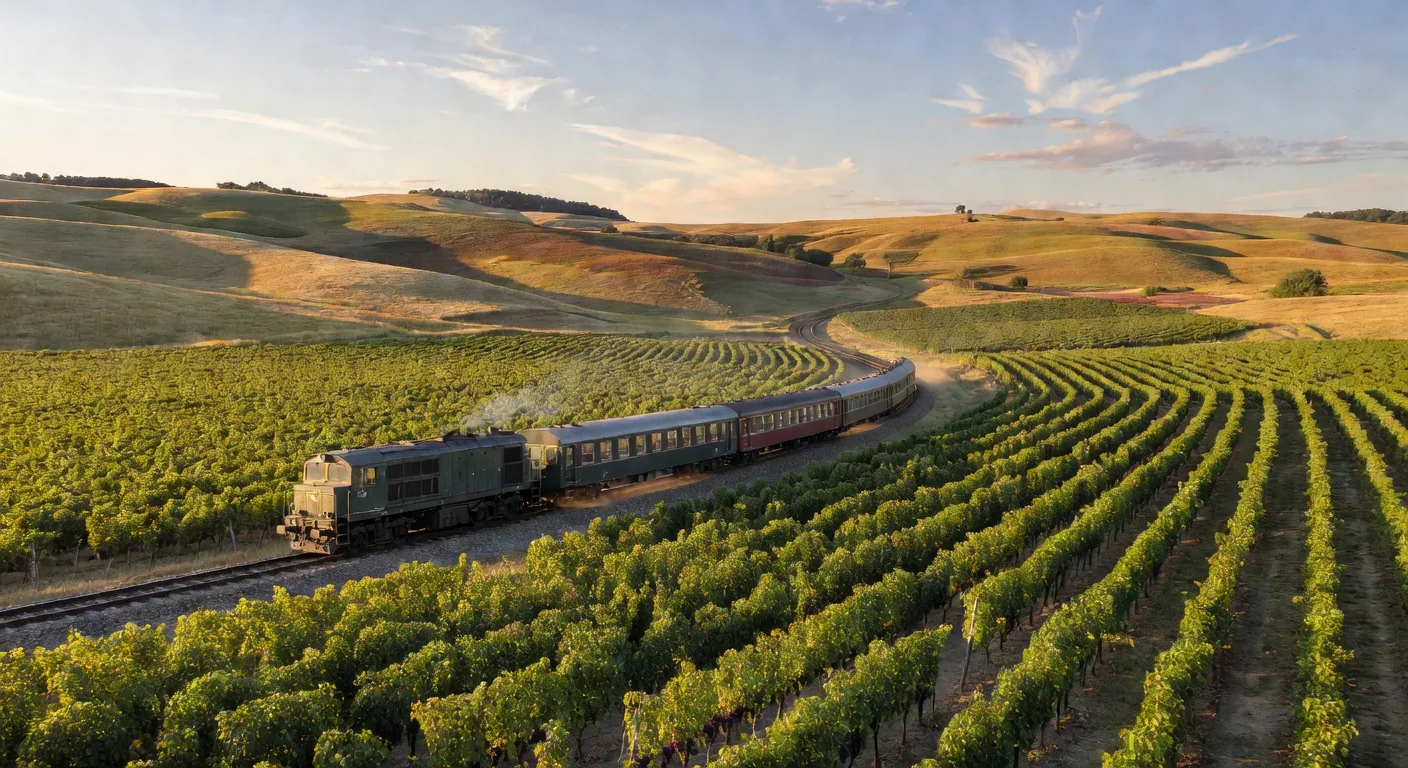
There is a particular magic to watching landscapes unspool through a train window — the way light shifts, villages appear and vanish, and the world slows to the rhythm of steel on rail. Rail travel is not merely transport; it is one of the most immersive ways to encounter a country's geography, culture, and soul.
We've surveyed thousands of reader journeys, consulted rail historians, and scrutinised timetables across six continents to bring you this definitive ranking of the world's ten most spectacular train rides in 2026. These are routes where the journey is unequivocally the destination.
Our Criteria
To qualify for this list, a route had to score highly across four dimensions: visual drama (the sheer wow-factor of what you see from the window), engineering audacity (viaducts, spirals, and tunnels that defy geography), cultural immersion (the communities and traditions you encounter along the way), and practical accessibility (can travellers actually book and ride it in 2026?).
"The train is not merely a means of getting from one place to another — it is a way of seeing the world at the pace it deserves to be seen." — Paul Theroux
Glacier Express — Switzerland
St. Moritz → Zermatt · 291 km · ~8 hours
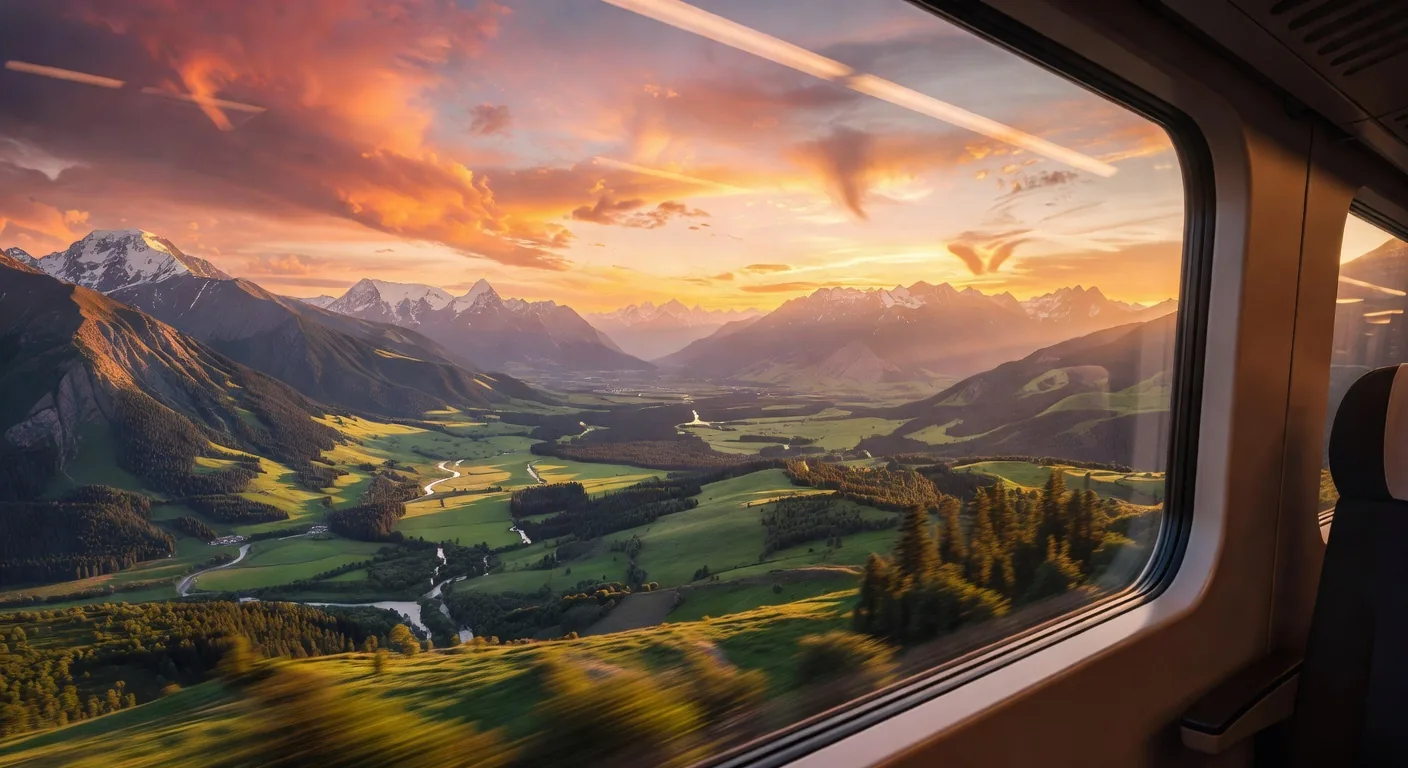
Billed as "the world's slowest express train," the Glacier Express is the pinnacle of Alpine rail travel. Crossing 291 bridges and passing through 91 tunnels, the route crests the 2,033-metre Oberalp Pass and offers panoramic windows that frame the Matterhorn in a finale of epic proportions. The dining car serves Swiss classics — rösti, raclette fondue — as the scenery demands a second glass of local wine.
In 2026, the recently refurbished Excellence Class carriages introduce open-air observation platforms between carriages, allowing guests to feel the Alpine air without leaving the train. Booking well in advance is essential, particularly for the panorama dome seats.
Trans-Siberian Railway — Russia
Moscow → Vladivostok · 9,289 km · ~6 days
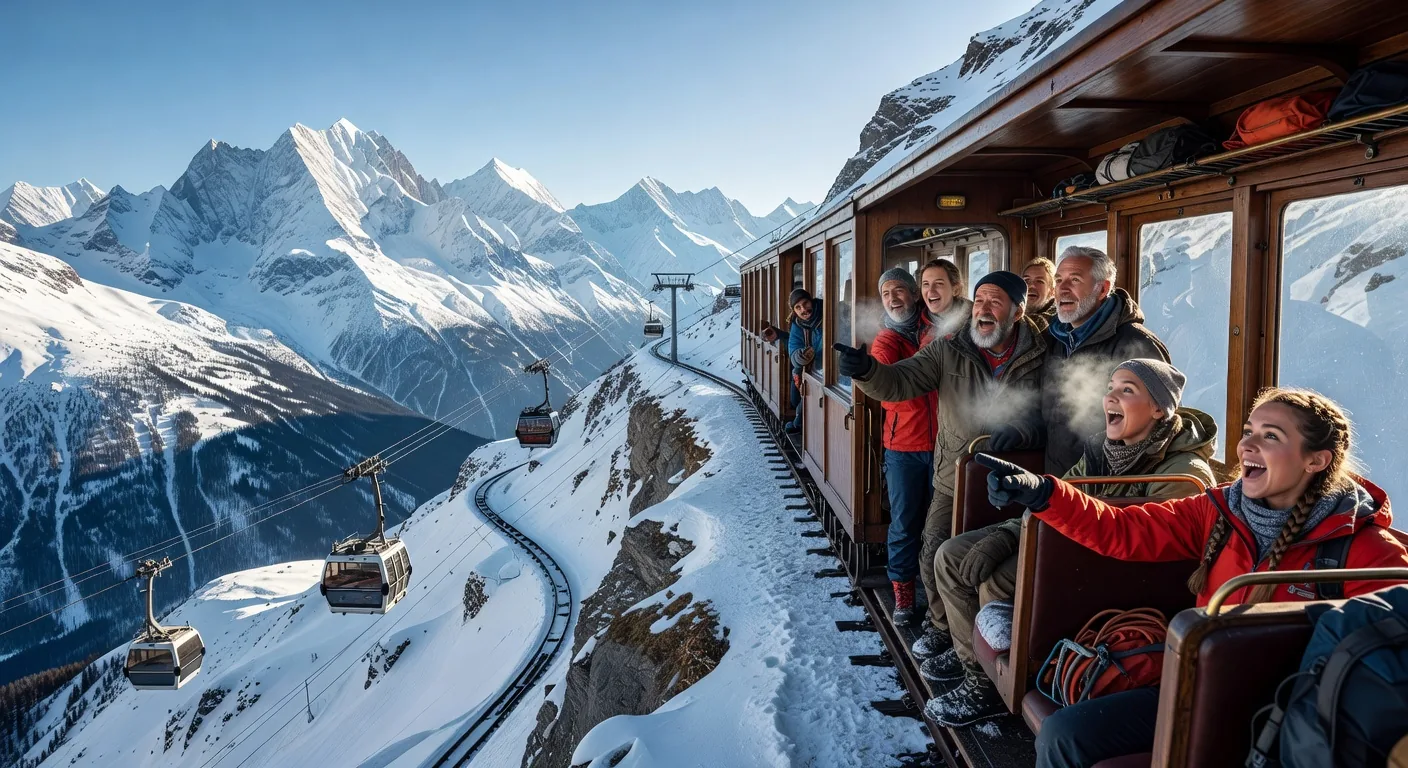
The world's longest continuous rail journey remains one of its most mythologised. Six days aboard this iron road is a meditative exercise in scale — crossing eight time zones, skirting the southern shore of Lake Baikal (the world's deepest lake), and traversing the limitless taiga that stretches to every horizon. The train becomes a village; passengers share tea from samovars in the corridor and swap life stories across the vast Russian steppe.
The route's drama peaks at Lake Baikal, where the track hugs the cliff-face above the water's impossible turquoise. On winter journeys, the frozen lake creates a surreal, white infinity that no photograph can fully capture.
Bernina Express — Switzerland / Italy
Chur / Davos → Tirano · 144 km · ~4 hours
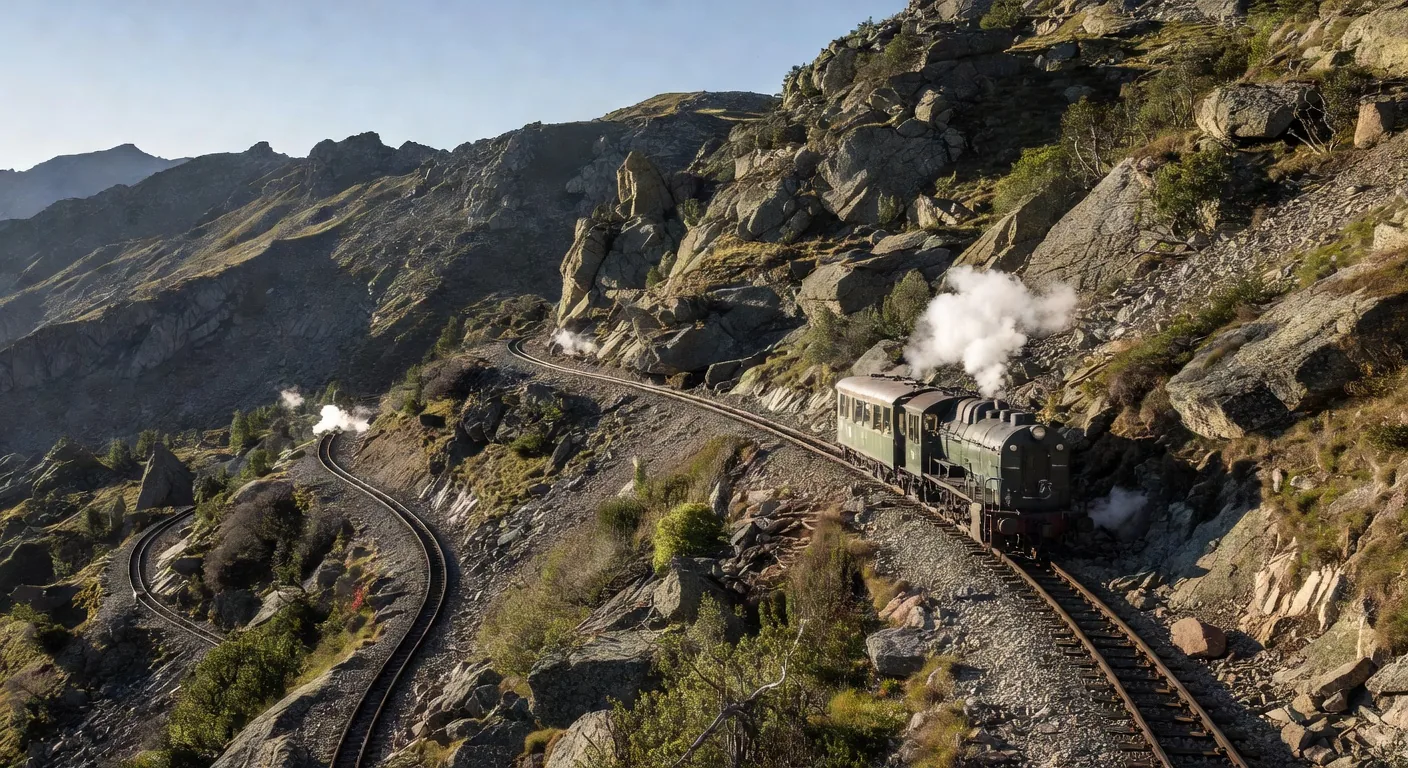
A UNESCO World Heritage railway that crosses the Alps without a single tunnel to cheat the scenery. The Bernina Express spirals up via the famous Brusio circular viaduct — a 360-degree stone loop that exists solely because the gradient is too steep to climb straight. At 2,253 metres, the Ospizio Bernina pass is the highest point on the European rail network, offering a vast white glacier panorama before the train descends into the palm-fringed lakes of northern Italy.
The contrast is extraordinary: within four hours, you travel from Arctic-altitude snowfields to Mediterranean warmth, with a glass of Valtellina red waiting in Tirano.
Coastal Starlight — United States
Los Angeles → Seattle · 2,235 km · ~35 hours
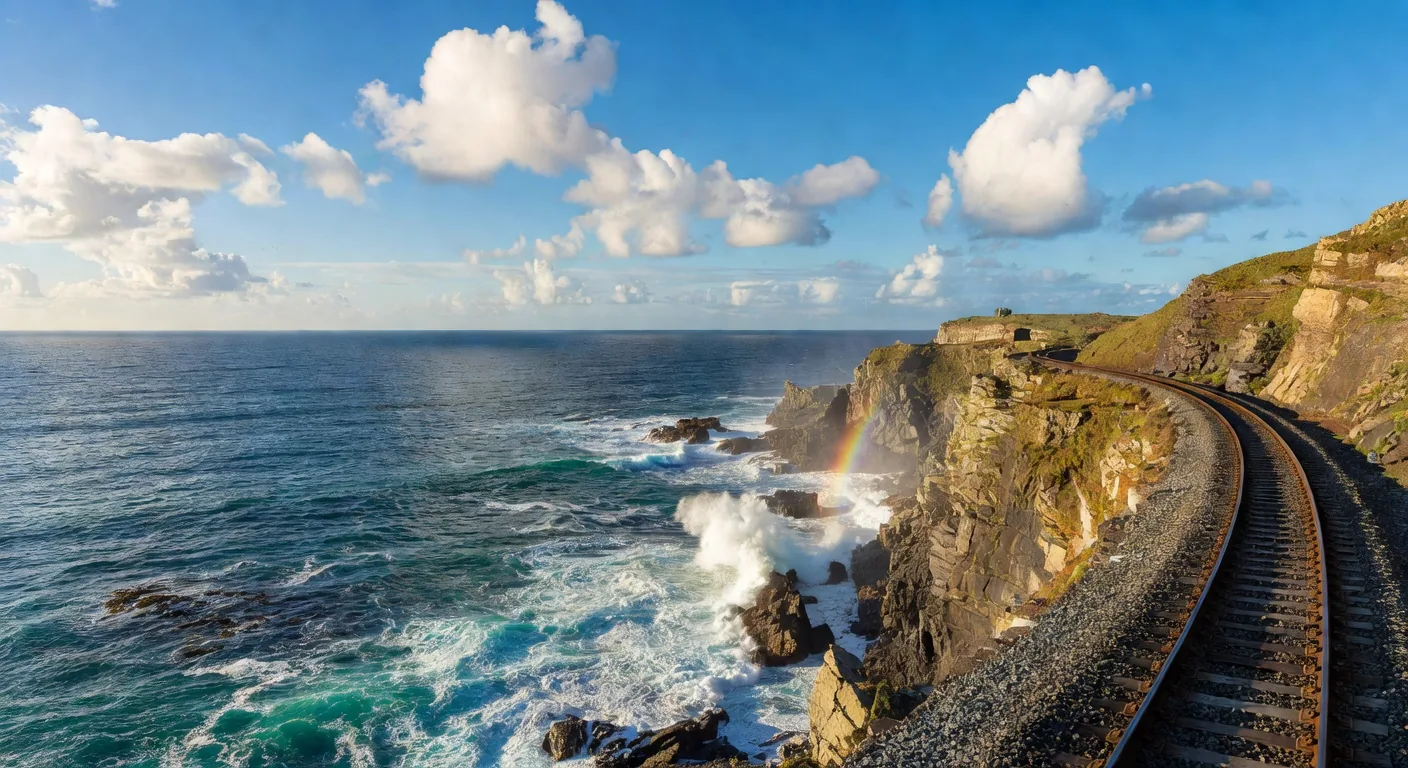
Running the length of the American Pacific coast, Amtrak's Coastal Starlight threads through some of California's most dramatic geography. The crown jewel is the stretch between San Luis Obispo and Santa Barbara, where the track clings to ocean bluffs with waves crashing below and sea otters visible in the kelp beds. Further north, the Cascade Range creates a volcanic backdrop through Oregon and Washington, with Mount Shasta presiding like a sentinel over the route's mid-section.
The double-decker Superliner carriages include a Sightseer Lounge with wrap-around windows — the perfect perch for the sunset portion as the train heads north along the California coast.
🎟️ Plan Your Scenic Rail Journey
Many of these routes can be combined into one epic multi-week itinerary. Our Europe Rail Grand Tour covers three of the top-10 routes in 14 days, with pre-booked reservations and flexible passes.
View 14-Day Europe Itinerary →
The Ghan — Australia
Adelaide → Darwin · 2,979 km · ~54 hours
Named after the Afghan cameleers who first pioneered this desert route, The Ghan is Australia's legendary transcontinental, bisecting the continent from south to north through the Red Centre. It is among the world's great luxury train experiences — an institution of unhurried desert travel where the scenery alternates between rust-red spinifex plains, ancient salt lakes, and the ochre monoliths of Central Australia.
Off-train excursions at Alice Springs and Katherine Gorge are integral to the experience. In the Northern Territory, the train pauses for a sunset champagne event at Manguri — guests standing on the track in the middle of nowhere, watching the desert sky ignite. This is the kind of moment that becomes the story you tell for the rest of your life.
Tren Crucero — Ecuador
Quito → Guayaquil · 450 km · 4 days
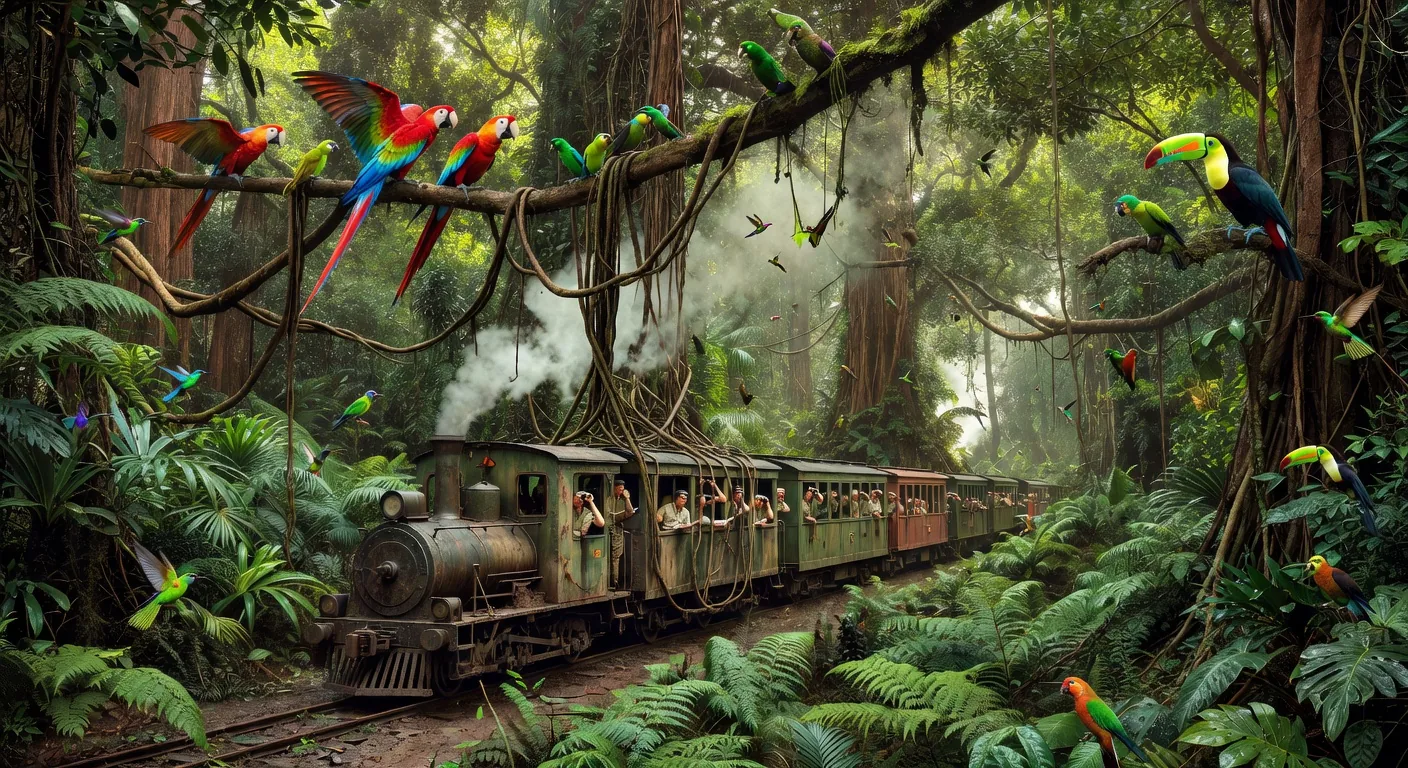
One of South America's most dramatic rail journeys, the Tren Crucero descends from the Avenue of Volcanoes — the Andean spine that includes Chimborazo (the point furthest from Earth's centre) — all the way to the tropical Pacific coast. The engineering centrepiece is the Devil's Nose (Nariz del Diablo) near Alausí: a vertical cliff face that defeated 19th-century engineers until they invented the zigzag switchback, still used today in a vertiginous show of railway ingenuity.
The four-day format includes community visits, traditional cooking demonstrations, and archaeological sites. It is as much cultural immersion as scenic spectacle — and a rare opportunity to witness the vertical geography of Ecuador from iron rails.
Rovos Rail — South Africa
Cape Town → Pretoria · 1,600 km · 2–3 days
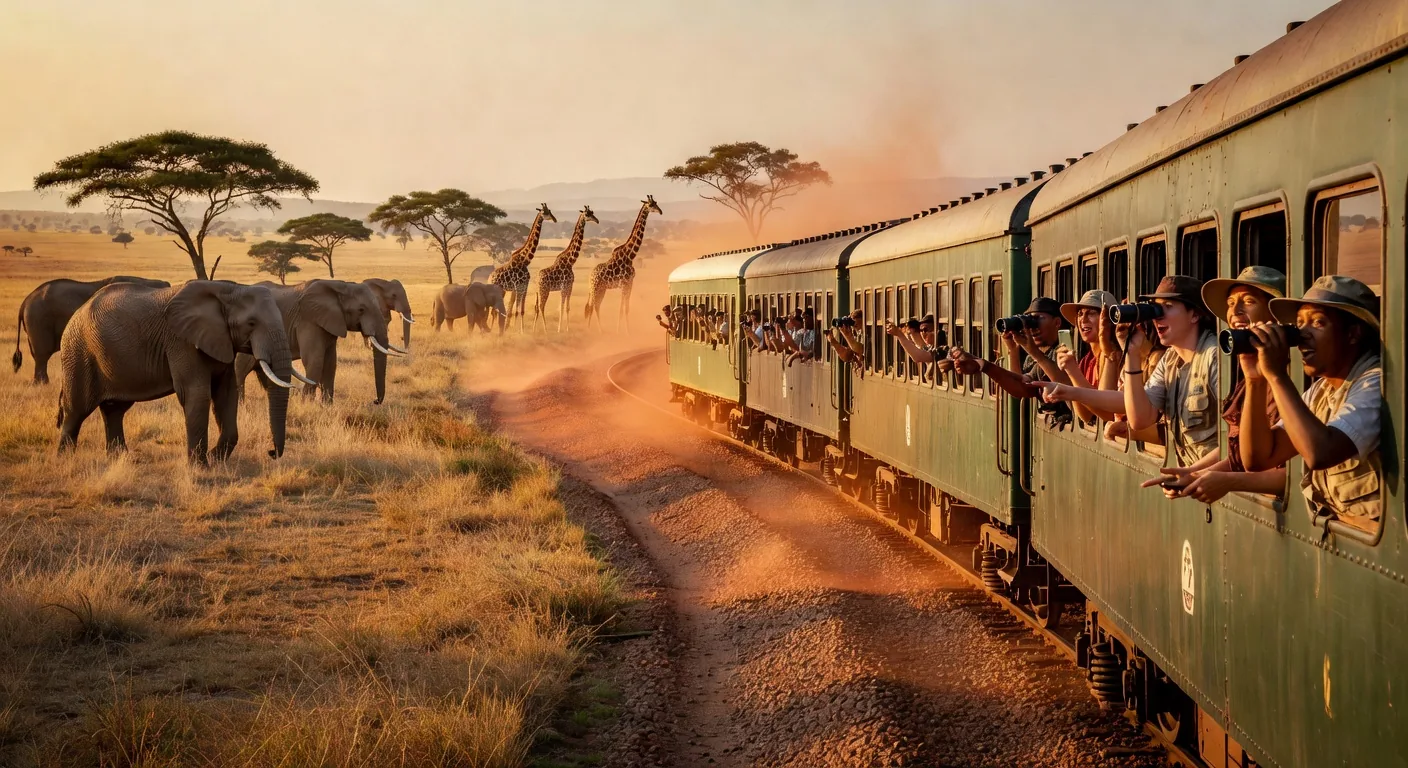
South Africa's "Pride of Africa" is regularly cited as the world's most luxurious train. Rovos Rail's Edwardian carriages have been meticulously restored to period authenticity — wood-panelled suites with en-suite bathrooms, a formal dining car serving five-course dinners with South African wines, and an open-ended observation car for watching the Karoo desert and Hex River Mountains pass in cinematic slow motion.
The route through Matjiesfontein, the Hex River Valley, and the final Winelands approach to Cape Town (in reverse) is a love letter to the landscapes of southern Africa. A longer variant continues to Victoria Falls, adding Zimbabwe and Botswana to the journey's canvas.
Shinkansen Hayabusa — Japan
Tokyo → Shin-Hakodate-Hokuto · 825 km · ~4 hours
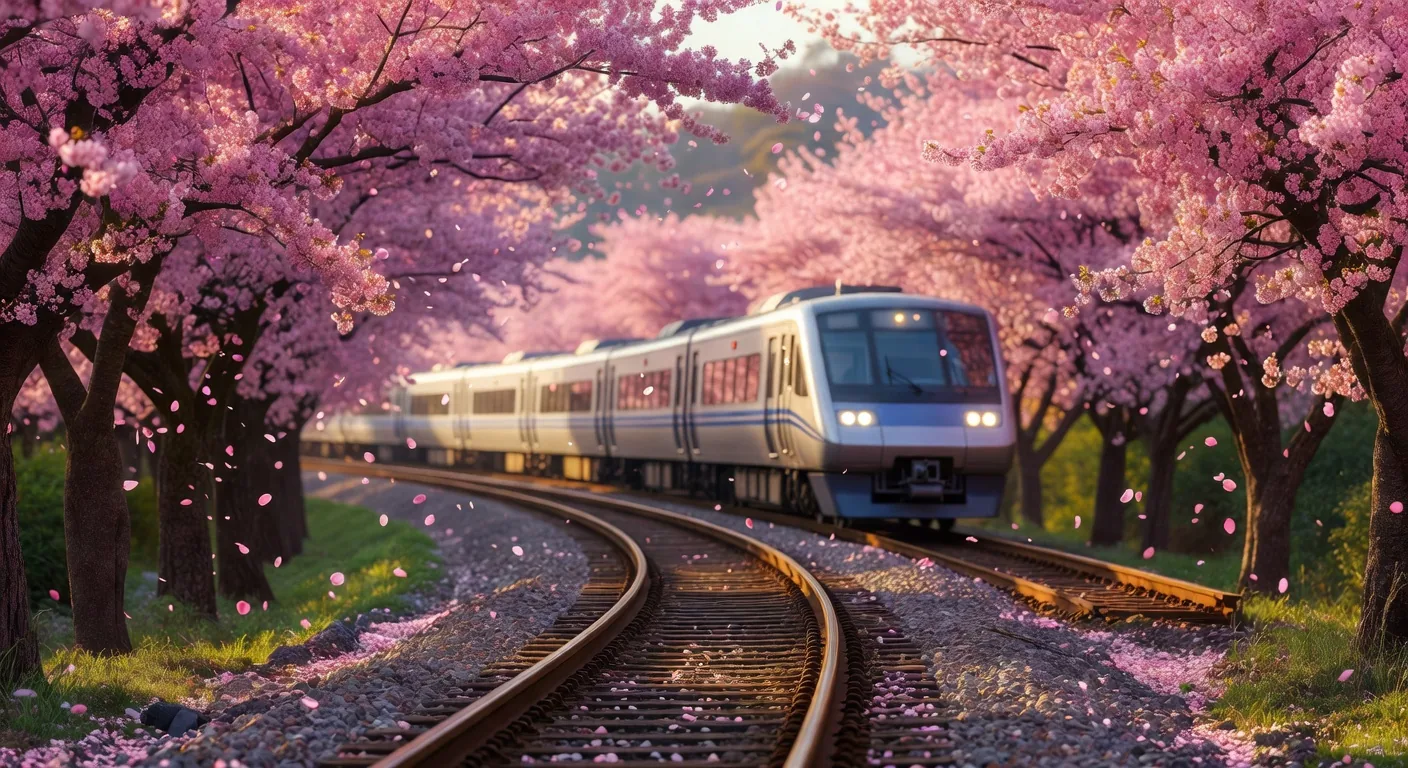
Speed and scenery combine in a way that should be contradictory but isn't. Japan's bullet train to Hokkaido is a masterclass in the engineering of beauty: the smooth, near-silent ride allows you to appreciate the landscape in a way that no aircraft can. Between April and May, the cherry blossom corridor through Tohoku is one of the world's most ephemeral spectacles — pink clouds of sakura flanking the track as the Hayabusa slips through at 320 km/h.
The route passes beneath Tsugaru Strait through the 53.85-km Seikan Tunnel (the world's longest undersea railway tunnel), emerging into Hokkaido's wide, Hokkaido-specific landscape — dairy farms, lavender fields, and volcanic peaks that feel like a different country entirely.
Belmond Hiram Bingham — Peru
Cusco → Aguas Calientes · 112 km · ~3.5 hours
The train to Machu Picchu is one of the world's most purposeful scenic railways — every kilometre is a descent through the Sacred Valley of the Incas, with the Urubamba River tumbling alongside and the snow-capped Veronica peak presiding overhead. The Belmond Hiram Bingham is the luxurious option: a 1920s Pullman-style service with brunch, pisco sours, and live Andean music accompanying your approach to the lost city of the Incas.
The final approach through the cloud forest — orchids clinging to the canyon walls, mist curling through tree ferns — is an orchestrated reveal of one of the world's most dramatic archaeological settings. Even on the more affordable Peru Rail services, this journey never disappoints.

West Highland Line — Scotland
Glasgow → Mallaig · 264 km · ~5.5 hours
Consistently voted Britain's most scenic railway and a strong contender for the world's most dramatic daylight route, the West Highland Line passes through a landscape of almost aggressive grandeur — across the desolate Rannoch Moor, through Glen Coe, past Ben Nevis, and over the iconic 21-arch Glenfinnan Viaduct (immortalised as the Harry Potter bridge). The final stretch to Mallaig skirts the "Road to the Isles" with views across silver lochs to the Isle of Skye.
In winter, the experience becomes almost monochromatic — grey skies, white snow, black water, red deer standing on the moor in the mist. In summer, the light lasts until 10pm and the heather turns the hillsides purple. There is no bad season on the West Highland Line.
Honourable Mentions
Ten routes can never contain all the world's great railways. Here are five that nearly made the cut and deserve their own future articles:
- Rocky Mountaineer (Canada) — Vancouver to Banff through impossibly green mountain passes, with dome cars and a gourmet dining service that rivals any restaurant in the Rockies.
- Flåm Railway, Norway — Just 20 km long, but those 20 km drop 865 metres through waterfalls and tunnels in one of the steepest railway descents on Earth.
- Qinghai-Tibet Railway, China — The world's highest railway, crossing the Tibetan Plateau at over 5,000 metres, with supplemental oxygen piped to passengers.
- Darjeeling Himalayan Railway, India — A UNESCO-listed narrow-gauge "toy train" that winds up through tea gardens to the hill station of Darjeeling with views of Kanchenjunga.
- El Chepe, Mexico — The Copper Canyon railway through a series of gorges four times larger than the Grand Canyon, with Rarámuri communities visible from the window.
Planning Tips for Scenic Rail Travel
The best scenic train experiences require some advance preparation. Here's what our editorial team recommends:
- Book early for panorama seats: Glass-dome and premium observation carriages sell out months in advance on routes like the Glacier Express and Rocky Mountaineer.
- Research the left vs. right debate: On most routes, one side of the train offers significantly better views for a majority of the journey. Check forums like The Man in Seat Sixty-One for seat-by-seat guidance.
- Travel against tourist flow: On popular routes, travelling in the reverse direction (e.g., Zermatt to St. Moritz instead of vice versa) often means less crowded carriages and the same scenery.
- Consider shoulder season: October on the West Highland Line, February on The Ghan, and late March for cherry blossom Japan all offer peak conditions with fewer crowds than summer peaks.
- Allow time at endpoints: The best scenic rail journeys deserve proper bookends — don't rush back the same day. Stay in Zermatt, linger in Mallaig, spend a night in Tirano.